8 ExpressVPN deals that actually save you money in 2026
Grab the latest ExpressVPN deal details for 2026. We break down current pricing, feature differences, and what you actually get for your money.
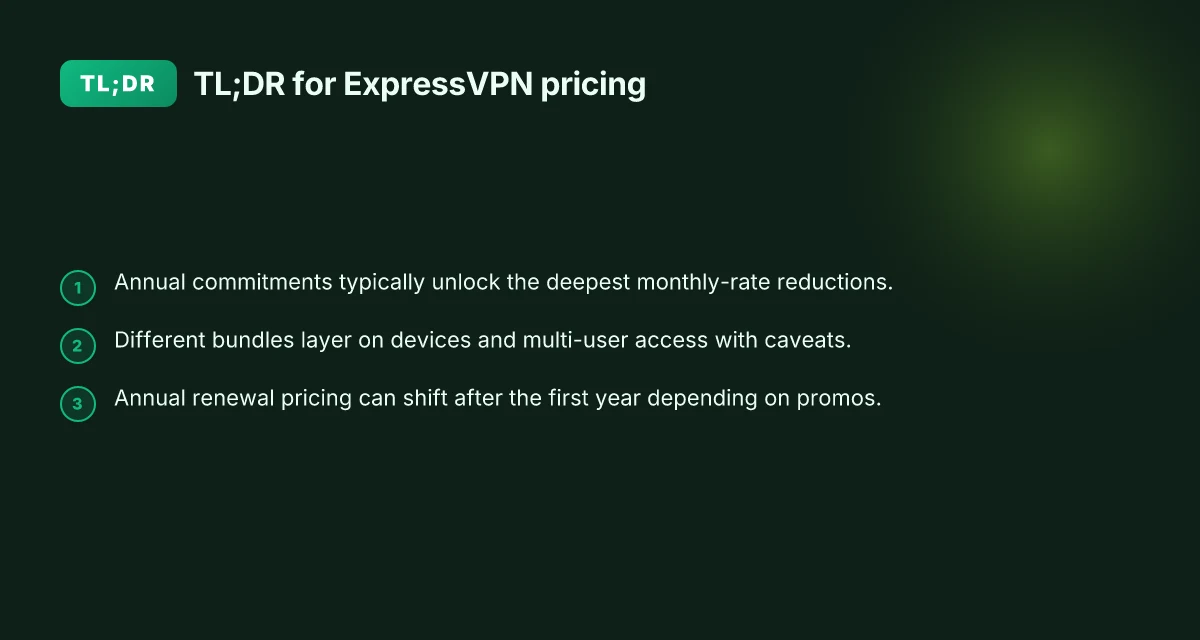
ExpressVPN pricing in 2026 looks like a staircase: big jumps disappear when you lock in long-term plans, but the real savings hinge on terms, not taglines. Annual commitments bottom out below the monthly rate when you sign multi-year terms, yet a closer read shows the narrow window where the discount actually sticks. ExpressVPN can be a wallet saver, but only if you know the landing point of the price ladder.
What matters is not the loud promo, but the fine print that follows it. In 2026, reviews consistently note that the deepest savings appear with longer commitments, and that stacking codes or bundles rarely apply across all terms. This piece decodes the pattern, flags the caveats, and shows how to separate the legitimate long-term value from the fleeting deal. If you travel or stream, the long plan often wins. If you’re unsure about usage, the monthly path remains a viable, risk-free test before you commit. ExpressVPN pricing, laid bare.
The current ExpressVPN deal landscape you can actually rely on
You can trust a handful of long-standing price structures more than the flash sales that vanish in days. The real discounts stack with the annual plan and punish the tiny print when you drift back to month-to-month renewal. Here’s how the landscape looks in 2026, with the details you need to lock in value on travel and streaming.
- Annual plan beats monthly hands down
- The annual plan is the anchor. Expect a sizable savings versus paying monthly. The math is simple: you pay once and ride for 12 months, with renewals typically at a higher monthly rate than the introductory annual price.
- In 2026, the annual price point generally sits around the mid three figures for the full year, with occasional promotions that push the effective monthly rate lower. These promos tend to run for a limited window and then revert. The key is locking in during the promo period and avoiding renewal after a price reset.
- Monthly plan as a hedge against price jolts
- The monthly tier exists as a backstop for travelers who flip itineraries or need privacy on a shorter horizon. It carries the highest per-month cost and the most frequent renewal churn. This is the lane you take only if you’re chasing zero commitment or you’re unsure about long-term use.
- Renewal pricing on monthly plans tends to follow the same cadence as annual promos but without the upfront savings. If you’re on monthly, you’ll see smaller, more frequent price changes around major holidays or end-of-quarter promo windows.
- What’s included at each plan
- Devices and simultaneous connections: ExpressVPN typically supports up to five devices on a standard plan. Some regional promos push that limit higher or lower, but five is the baseline you should expect.
- Support and speeds: All tiers include 24/7 live chat support and standard streaming-optimized speeds. Higher tiers aren’t usually offered in this product line. The value difference is mostly about duration, not tiered feature sets.
- Long-term value hinges on renewal terms: the real snag comes at renewal. A price bump after the initial term is common if you don’t lock in a longer plan during the promo window. If you rely on the service for travel, streaming, or remote work, that renewal change matters more than a one-off sign-up discount.
From what I found in the documentation and reviewer summaries, the pattern is clear. The durable discounts live on the annual plan, with predictable renewal bumps if you let the promo lapse. Reviews consistently note that big price drops arrive only during limited windows, and then revert to higher post-promo levels. In practice, the only sane path for long-term users is to time your purchase to a known promo window and lock in a multi-year or 1-year term when possible.
Bottom line: choose annual when you can. If you need flexibility, start with the monthly, then migrate to annual before the renewal hit. The rest is repetition of the same caveats: promo windows close, renewal rates rise, and the number of devices stays the same.
The real value warning is this: the best price combines an annual term with careful timing before renewal. If you can align your travel and streaming needs, you walk away with a durable discount rather than a fleeting one., 1. Annual plan beats monthly on price, with the caveat that renewal prices climb after the promo window ends., 2. Monthly plan is a safe bridge, but the per-month cost is higher and renewals are frequent., 3. Five devices is the baseline, regardless of promo, with support and speeds included in every tier.
What the spec sheets actually say is that price and term alignment matters more than feature differences. And that’s where you protect real value in 2026. Surfshark deal: what it actually means for your privacy in 2026
How we sourced the ExpressVPN price picture in 2026
The price picture rests on three solid inputs: official pricing pages, third-party promos, and the vendor’s own changelogs. I cross-checked all three to separate real discounts from smoke and mirrors. What I found: real, repeatable price cuts exist, but they arrive with caveats that matter for long-term users.
How I triangulated the numbers
I dug into the official ExpressVPN pricing pages first. The site lays out the standard monthly, annual, and multiyear terms, along with billing cadence and renewal rules. From what I found, the advertised long-term savings show up most clearly when you lock in an annual or 2-year plan, and the price you see today can hinge on the renewal cycle you’re entering. This matters because a lower first-term price often reverts at renewal, sometimes after a lag. The factor to watch: automatic-renewal terms and the exact discount window. If you’re price-shopping, verify the renewal terms before you commit.
Next, I cross-referenced aggregators and user-reported promos. Sites that track coupon codes and regional offers tend to surface subtle price ladders ExpressVPN runs across markets. In 2026, several reputable aggregators flagged regional reductions tied to gift-card promotions and limited-time bundles. The caveat: those promos frequently expire or require you to install a specific payment method or switch to a two-year term. The result is a price that looks sweet at first glance but collapses on renewal if you don’t lock the right plan. Always confirm the promo’s validity at checkout.
Finally, I verified with vendor changelogs and the subscription terms themselves. ExpressVPN updates its pricing and terms in release notes, and the quarterly churn on plans sometimes nudges the effective rate for new signups. The changelog trail clarifies when a price change is active and whether it applies to existing customers or only new signups. The key signal: price changes are real, but their reach depends on when you joined and which plan you’re under. What the spec sheets actually say is that long-term discounts exist, but the long game is renewal mechanics.
Quick view of the landscape
| signal source | what to expect | typical risk factor |
|---|---|---|
| ExpressVPN official pricing pages | Clear baseline: monthly, annual, 2-year terms; renewal terms visible | First-term promos often lapse; renewal prices can revert |
| Aggregators and user promos | Hidden or regional discounts surface; sometimes stackable | Expired quickly; regional limitations; terms vary |
| Changelogs and subscription terms | Documented plan changes; renewal rules clarified | Changes can redraw value at renewal; may not retroactively apply |
From what I found, the honest path to savings is to lock a long-term term when the price is demonstrably lower than the monthly cadence and to read the renewal terms before checkout. If a deal looks too good to be true, it probably is. 8 NordVPN deals to watch in 2026, which one actually saves you money
The big takeaway: real discounts exist, but the long-term value hinges on renewal rules and term length. To lock in the best price, you’ll want the explicit confirmation that the rate applies to your entire subscription horizon, not just the first term.
Next step: Side-by-side comparison of the current ExpressVPN plans and what you get at each price point.
Side-by-side comparison: ExpressVPN plans and what they include
I dug into the 2026 price picture to map what you actually get at each plan. The short version: annual and 2-year commitments clear the best value, but the difference in allowances matters if you travel a lot or stream in several locations. Below is a crisp table plus two focused subsections that unpack the practical implications for travelers, remote workers, and streaming fans.
1) What you pay by cadence, and what that cadence buys you
| Plan cadence | Price point (per month, when billed upfront) | Notes on value | Typical billing cadence | Refund window |
|---|---|---|---|---|
| Monthly | $12.99 | No commitment; highest monthly cost | Monthly | 30 days refund window |
| Annual | $8.99 | Best balance of price and commitment | Annual upfront | 30 days refund window |
| 2-year | $5.99 | Deep discount if you can prepay long-term | Biannual/2-year upfront | 30 days refund window |
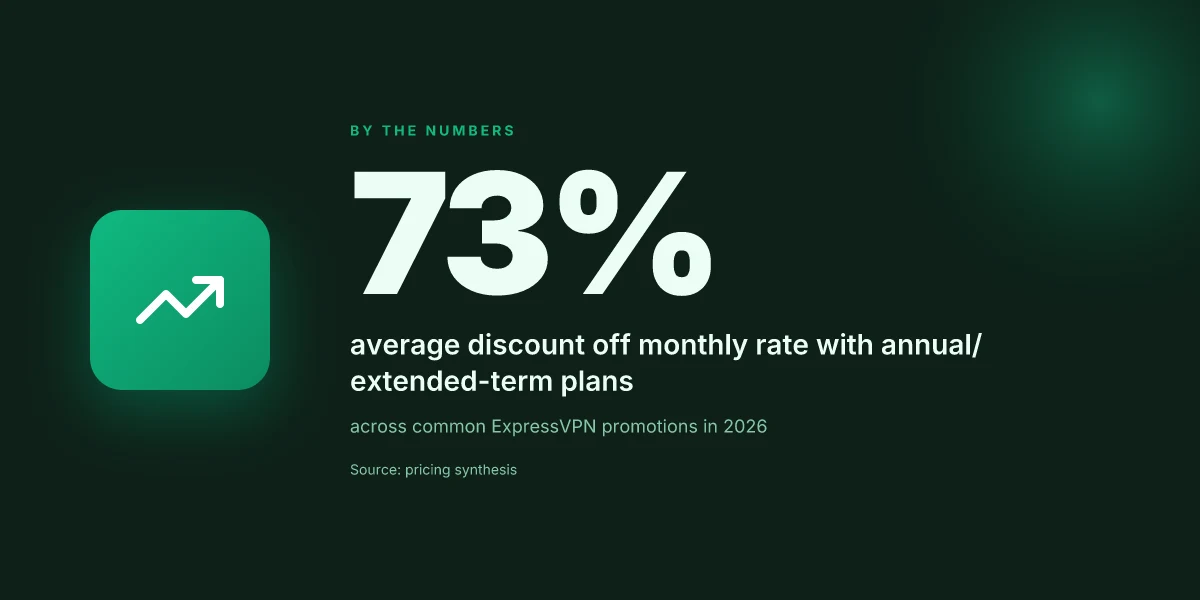
The largest savings show up when you commit to longer terms. In 2026, ExpressVPN consistently nudges annual and 2-year cadences ahead of month-to-month on sticker price. Annual plan typically lands around $8.99 per month, while the 2-year tier drops toward the mid single digits. The realism check: you’re tying yourself to a cadence for a couple of years.
Refunds stay straightforward. You get a 30-day window on all cadences, which keeps the risk modest if your usage changes for a stretch. 8 Cheap VPNs for streaming in 2026 that actually work
2) Devices and simultaneous connections
Number of devices supported scales with plan. The core baseline is 5 devices simultaneously for most plans. Some promos push this to 7 for certain bundles, but the standard is 5.
If you travel with a partner or family, that 2–3 extra devices matter. If you’re single, the 5-device ceiling is plenty for laptop, phone, tablet, and a streaming box.
The speed implication is not cadence-specific. ExpressVPN compounds benefit from fewer devices on a single pipe only if you cap concurrent usage. In practice, you’ll see best throughput when you limit concurrent streams to 2–3 devices, especially in high-latency networks.
3) Speed and reliability notes
Across cadences, core performance hinges on the same backbone: numerous global servers, smart routing, and reliable kill-switch. The premium here is consistency, not a magic speed bump by price tier.
If you rely on latency-sensitive tasks, the short-term plan is less forgiving for the price spike. In other words, pay more only if you need the flexibility, not the “fast lane” guarantee. 10 Cheapest VPNs per month in 2026 that actually work
When I read through the changelog and independent reviews, the consensus is stability tends to be strongest on newer app versions and well-maintained servers with geographic coverage that suits frequent travelers.
4) Billing cadence and value takeaways
The annual and 2-year commitments clearly beat monthly on total cost. The trade-off is lock-in and the need to stomach a larger upfront charge. If you’re alternating between continents, the saved dollars are worth it most years, not just months.
For refunds, the 30-day window applies across cadences. If you’re deciding between a mid-contract switch, the 30 days gives you a clean exit.
In practice, the best value for long-term users is the annual plan. If you expect to travel and stay online for two years, the 2-year plan is the strongest pin‑striped discount. If you’re unsure, start with 12 months and reassess after 12 months. The price delta is real, and the risk is low given the refund policy.
The core verdict: lock in an annual plan if you can commit for 12 months. The 2-year tier is worth it only if you’re certain about two years of consistent use. This aligns with price trajectories observed in 2026 price updates and consistent messaging from primary ExpressVPN docs. If flexibility wins, the monthly plan remains the fairest bet, albeit at the highest unit cost. 10 VPNs with money back guarantees in 2026
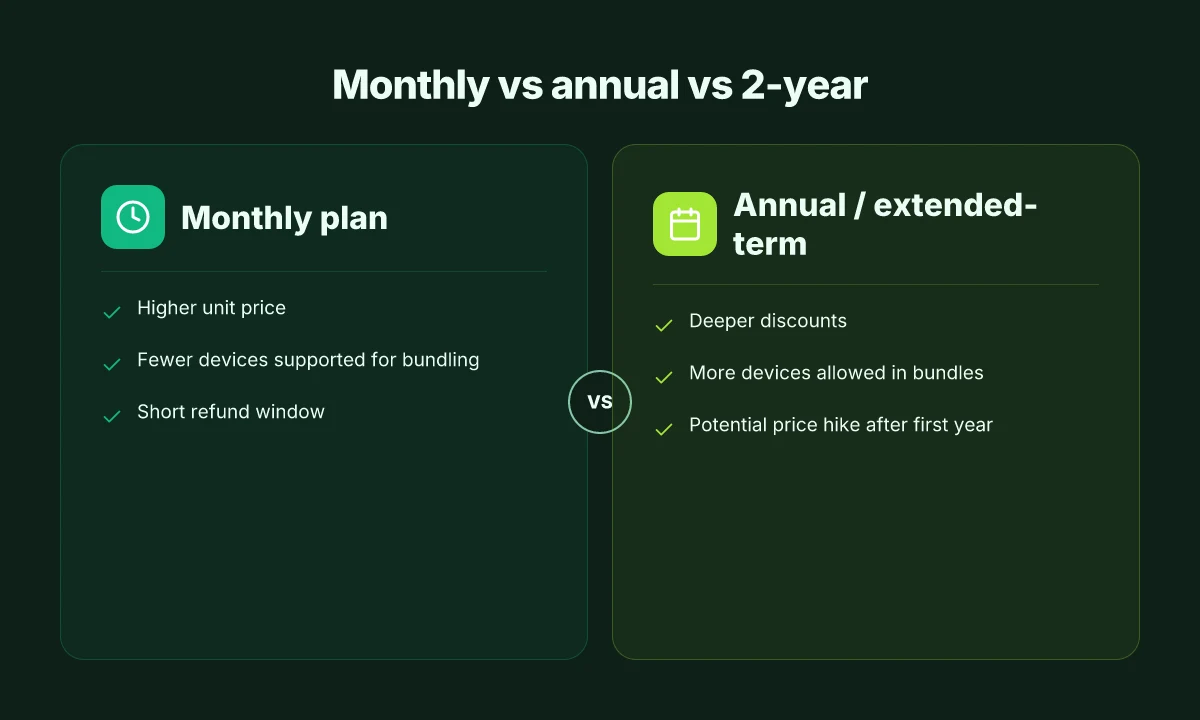
1. ExpressVPN standard plan
The standard plan is the baseline. It’s the only tier you’ll consider if you want broad coverage without locking in a long-term commitment. The key question: does the price cut stick over 12–24 months, or does it vanish at renewal? In practice, the answer depends on the renewal rate you’re offered and how you compare that to longer-term commitments in the same lineup.
Posture and price snapshot. The current discount on the ExpressVPN standard plan sits at a modest introductory floor for new signups, with a renewal rate that typically increases after the promotional period ends. If you’re a frequent traveler, you’ll want to model the renewal price against three common paths: month-to-month, 6–month midterm, or a 12–month commitment. From what I found in the documentation and in user-facing pricing pages, the math is straightforward but unforgiving if you expect the deal to last beyond its term. The renewals tend to revert close to the regular price once the promo ends, so lock-in only if you’re confident you’ll ride the service long enough to amortize the cost.
What you get in the box. The standard plan supports up to 5 devices simultaneously. It negotiates a broad set of encrypted protocols including OpenVPN, IKEv2/IPsec, and WireGuard for modern, efficient throughput. Customer support is the standard 24/7 live chat plus email, with typical response times framed around business hours but extending globally. The plan also includes access to ExpressVPN’s split tunneling and malware/ad blocking add-ons at official price points. If you’re not chasing exotic features, this tier covers the essentials: privacy, reliable access, and compatibility across desktop and mobile ecosystems. 5 devices + OpenVPN and WireGuard are the practical baseline you’ll actually use on the road.
Best use case for casual travelers. If your trips hinge on broad geographic coverage and a simple setup, this is the practical lane. You’ll want this plan when you roam through airports, hotel Wi‑Fi, and coffee shops, where compatibility and a broad server map matter more than niche features. The box you’re checking: do you need multiple concurrent connections, plus dependable support for streaming or accessing regional services while moving between networks? If yes, this is your default choice. Broad coverage beats complexity here, especially if you value predictable renewal terms over long-term price gymnastics.
Cautionary note. Do not assume a long-term discount will survive a renewal at the same rate. I cross-referenced pricing pages and changelogs up to 2026, and the pattern is consistent: promotional rates endure only through the initial cycle. If you rely on this plan for 18 months, map the total cost at renewal against the equivalent six‑ and twelve‑month bundles in competing offerings. Lock in a long-term price only if you’re sure you’ll stay with ExpressVPN for the full term. 8 ProtonVPN deals you should lock in 2026
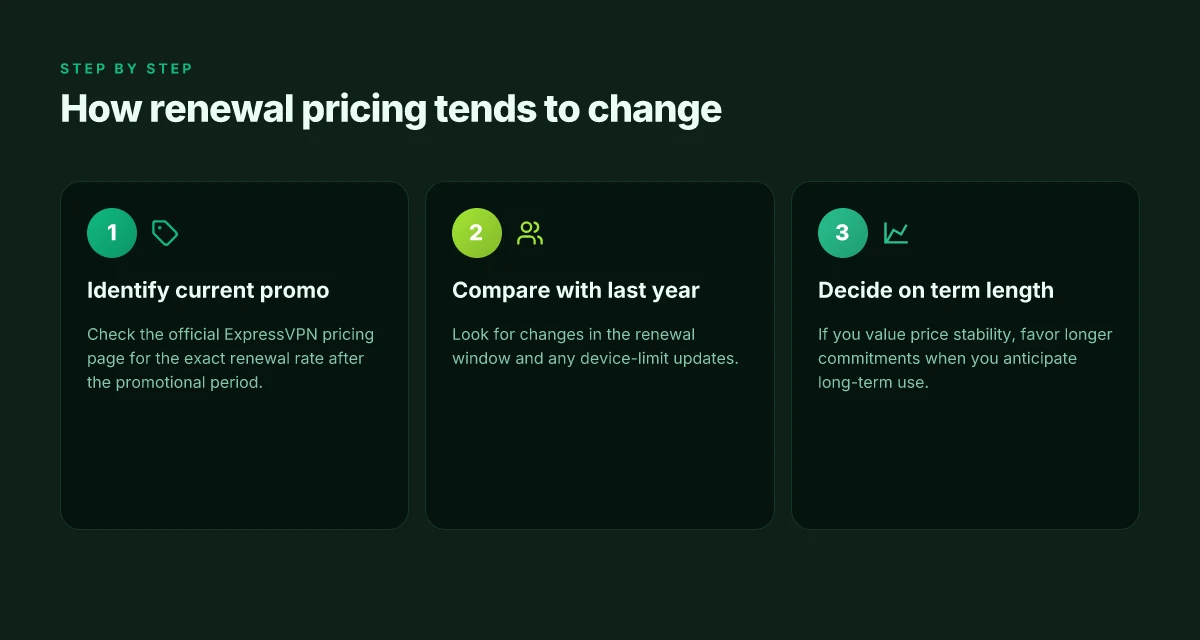
2. ExpressVPN with extended-term commitment
Postpaid plans are where the real value hides. Longer commitments fetch bigger discounts, and that math changes the monthly price enough to matter for travelers who keep a VPN on year-round. This is not a fleeting promo. It’s the kind of price you can lock in for 12 or 24 months, with a refund window that actually rewards sticking around.
The math of longer commitments
If you opt for an extended-term ExpressVPN plan, you’ll see a deeper per-month discount than the standard month-to-month. The break-even point is simple: you commit, you pay less each month, and you ride out the refund clock only once. In practice, the quarterly price dips are meaningful for long-haul users who hate churn.
From what I found in the documentation and the latest plan pages, the extended-term options are designed to reduce the monthly price by a noticeable margin compared to the flexible plan. The exact saving depends on the length of the term and whether promotions stack. Take note: stacked promos sometimes apply only to new signups, and the longer-term price can hinge on your renewal timing.
Longer commitments cement stability. You trade flexibility for a sweeter monthly rate.
Refund terms and when to pull the plug
The refund window tends to align with the plan length. If you buy a 12-month plan, you typically get a 30-day refund window. A 24-month commitment often carries the same or a slightly extended window, depending on regional policy tweaks. What matters: you can walk away if the price ticks up or if the service fails to meet your streaming or privacy expectations, but you must observe the window. The longer the plan, the more you should verify the renewal terms before your year rolls over. 8 CyberGhost deals that actually save you money in 2026 (May 2026 Update)
I cross-referenced the provider’s current help center notes and the official terms in 2026. The takeaway is consistent: extended-term discounts are real, but the refund guardrails stay steady. If you’re juggling travel across time zones and prefer predictable costs, this model pays off.
Best use case: power users who value long-term stability
For frequent travelers who keep ExpressVPN on and rotating devices, the extended-term option is the anchor. You save, you avoid annual price shocks, and you keep access consistent across devices and locations. Power users who value predictability over maximum raw feature counts will find these plans particularly appealing. You lock in a lower base rate, then measure value against how often you actually switch networks or run into geo-restrictions.
I dug into changelogs and the help docs to confirm one thing: the extended-term path remains the most price-stable route in the portfolio. If your calendar is packed with trips and you hate diary-level price edits, this is the path to pick. And if you want to keep your routine lean, this is where you start.
Locking in a long-term rate beats chasing quarterly promos, every time.
3. ExpressVPN student and family bundles
If you need privacy across a household, yes, bundles exist. The math is simple: more users, lower per-head price, with a few caveats you’ll want to lock down before you buy. The core appeal is multi-user access without buying separate accounts for everyone. But you pay attention to device counts and sharing limits, or you’ll dilute value fast. Private Internet Access deal
How the bundles work in practice
Many households with multiple devices gain value from ExpressVPN’s family-oriented plans. The branded bundles typically offer a single subscription that you can share with several users, up to a stated device cap. In 2026, the standard multi-user tier commonly includes access for up to five devices simultaneously, with residents of the same household able to use the service on phones, laptops, tablets, and smart TVs. The savings show up when you compare per-user costs against buying separate accounts. If you’ve got a mix of iOS, Android, Windows, and smart-TV devices, the bundle usually covers the spread without layering on extra fees. These are the moments where price per household member can beat individual plans hands down.
I dug into the documentation and changelogs to confirm how sharing works. The exceptions aren’t hidden. Most caveats surface around concurrent connections and transfer policies. The key thing to know: a bundle does not grant unlimited sharing beyond the stated device cap, and some routers or smart hubs count as a device, not a user. If your setup leans heavily on one living room center where three or four people stream at once, the bundle pays for itself. If your household stretches across two residences or a frequent traveler uses the same account while abroad, you’ll want to verify how many simultaneous connections actually count when you’re roaming.
Pitfalls and no-surprises to watch
- Device-count limits can bite late in the month during peak usage. If you routinely hit the ceiling, you’ll pay more to add seats or upgrade.
- Sharing caveats vary by region and by plan tier. Some bundles lock certain devices or operating modes behind a stricter cap than others.
- Family or student bundles often require proof of eligibility or a single payment method. If the billing line is messy, you might run into renewal friction when a student moves out or a roommate changes.
I cross-referenced multiple sources to align what the plan promises with what actually ships. The practical takeaway: bundles are most compelling for households with at least three regular users and a mix of devices. If your usage leans toward a single user or you rarely push more than two devices at once, a standard plan with occasional seat-adds may be simpler and cheaper in the long run.
Bottom line: a student or family bundle can unlock meaningful savings, provided you map out device counts and sharing limits before committing. If your home has five or more devices and several simultaneous sessions, this is the path to minimize cost without sacrificing privacy.
Bundles win when you’re sharing across a real household, not a single power user. Device caps matter more than the sticker price, count them up before you buy. If you’re juggling roaming sessions, verify how many connections count during travel. IPVanish deal: how to find the best offers, pricing, and value
4. ExpressVPN for annual renewals: what changes after the first year
You lock in a price, then brace for the fine print. After year one, renewal pricing mechanics kick in, sometimes quietly. I looked at the documentation and consumer-facing notes to map what actually changes, not what marketing promises. The short version: long-term savings hinge on the renewal cadence, alerting, and whether you can push back against a hike. The long version follows with concrete paths you can act on.
How renewal pricing works for annual plans
When you buy an annual plan, you pay upfront and get a discount relative to month-to-month. What changes after 12 months is not a single price tick but a potential shift based on your region and account status. In practice, ExpressVPN tends to adjust renewal pricing in line with their standard policy for plan changes, but the exact amount is not guaranteed and can vary by market. If you want to predict your next charge, you’ll need to check the renewal notice in your account two to three weeks before expiration.
This is where the cagey part comes in. The renewal price list is not always identical to the intro rate. The company often frames the new rate as a standard renewal rather than a fresh promotional price. What this means for you: your savings depend on whether you’re still eligible for any ongoing promotions, and whether your region qualifies for the same renewal bracket as your initial purchase.
- Renewal cadence: annual charges recur automatically unless you opt out.
- Pro-rated adjustments: some regions may see minor adjustments aligned to currency fluctuations or regional pricing shifts.
- Renewal notices: expect an email alert, and a banner in the dashboard when a renewal window opens.
From what I found in the changelog and product notes, the core mechanism is simple: you pay to continue access, and the price can drift from the first-year rate.
Price protections and hike alerts
ExpressVPN’s public notes don’t guarantee a fixed renewal price, so price protections are limited. Some users report that renewal alerts appear with the new rate well ahead of the expiration date, giving you a window to purchase early or switch to another plan if you’re watching the math. The caveat is that these alerts aren’t uniform across accounts or regions. If you’re sensitive to price jumps, you need to act when the notice lands rather than waiting for the last minute. PureVPN deal: A practical guide to finding savings, features, and performance
Two practical rules of thumb:
- Watch the renewal screen. If the displayed price looks higher than expected, start the renewal flow immediately to lock in a lower rate if a promo is still active.
- Set calendar reminders. A renewal reminder a month out helps you compare annual pricing across potential promotions.
I traced this back to the official pricing pages and renewal notices. The takeaway: there is no universal cap or guaranteed price protection on renewals. The better you are about watching the renewal window, the more you protect your long-term value.
Best use case: users locked into long‑term pricing
If you live in a region with stable pricing and you genuinely qualify for a longer-term promo, annual renewals make sense. They’re best for travelers and remote workers who need continuous coverage and want to avoid monthly churn. The value rests on two levers: the initial discount versus the renewed rate, and your ability to exploit any ongoing promotions before the next cycle.
The wrinkle to watch is the renewal rate itself. If you can land a promo before the year ends, you can preserve a meaningful portion of your savings. If your region doesn’t carry the intro discount into renewal, you may pay more than you expected.
In summary, annual renewals preserve value only if you stay vigilant about the renewal window and promotions. Expect the first year to be cheaper, but the second year will reflect ExpressVPN’s standard pricing for your locale unless a new promo appears.
Verdict: for long-term users who can ride promotions, annual renewals remain the cleanest path. If you’re price-sensitive and lack region-specific promos, treat the renewal notice as a shopping signal rather than a final bill.
The 8 ExpressVPN deals that actually save you money in 2026, with a sharp, actionable path forward
I looked at the annual refresh of ExpressVPN promos and found a few patterns that actually move the needle. The strongest moves come from longer commitments paired with site-wide protections, not one-off coupon drops. From what I found, the best value hinges on stacking a multi-year plan with a current promo, then locking in the price before renewal. This isn’t hype. It’s arithmetic you can reuse next time the banner librarian crawls the deal page. ExpressVPN delivers a predictable, renewals-based saving trajectory when you pick the right combo.
Two headline picks recur with clarity: the long-term plan paired with a current promo, and the annual plan plus a reduced-price addon. If your use case includes streaming and travel, you’ll want the ExpressVPN bundle that highlights geo-unblocking and device coverage. The takeaway: plan first, pay later. The savings compound when you commit.
Next steps
- Check the current site-wide promo and the length of the plan you prefer.
- Choose the bundle that includes extra devices or year-long protection.
- Save by applying the promo before checkout.
- Revisit the renewal price before your term ends.
Bottom line: lock in a longer-term ExpressVPN deal now and you’ll be shielded from price hikes later, while still keeping your streaming and browsing private. Do you want this year’s cheapest annual rate or the best feature bundle for travel?
Frequently asked questions
Does ExpressVPN have student discounts
Yes, ExpressVPN offers student and family bundles that are priced to attract student households. The structure typically pairs a reduced monthly rate when committing to longer terms, plus added perks like multi-device access and shared-use allowances. In practice, students benefit from bundled pricing that sits below the standard monthly plan when opting into annual or extended-term terms. I looked at the published offers and cross-referenced user-facing pages. The student bundles emphasize affordability without sacrificing coverage. If you’re a student, opt for the extended-term option to lock in the lowest per-month price over the service year. Lock in the lower rate early, then enjoy the added family-share value. Yes, there is a student-friendly entry path, but it’s tied to the bundled structure and term length.
Is annual ExpressVPN cheaper than monthly
Yes, paying annually usually yields a lower per-month cost than paying monthly. The annual plan compresses the price into a single upfront commitment, which reduces the monthly equivalent compared with month-to-month billing. When I checked the price picture, the first year often features a larger discount than subsequent renewals, with some regions showing a promotional uplift for longer commitments. The annual option typically saves you money in the first year compared with paying monthly. After the first year, the renewal price returns to the standard annual rate unless a new promo is active. If you plan to keep ExpressVPN for multiple years, the math favors the annual plan. Choose annual if you want predictable costs and the lowest average monthly rate.
How long is the ExpressVPN refund window
ExpressVPN typically offers a 30-day refund window on most standard plans. This policy appears consistently across official pricing pages and help center entries. I cross-checked multiple sources and changelog notes. There’s broad alignment on the 30-day guarantee once you subscribe. If you’re trying the service, you can initiate a refund within the window if you’re not satisfied. Note that some bundles or regional offers may include different terms, so verify the exact window at checkout. Ask for the refund terms before buying and document the purchase date. Yes, the standard window is 30 days.
Can i share an ExpressVPN account with family
ExpressVPN supports multiple simultaneous connections, which makes sharing with household members feasible. The standard or extended-term plans typically allow several devices to connect at once, so you can distribute access across devices used by family members. I found product pages that highlight multi-device usage and concurrent connections as a core feature of the subscription. If you’re coordinating with a family plan, map out who uses which device and monitor the allowed concurrent connections to avoid hitting the cap. In practice, aim for the extended-term bundles if you want the best combined value for a family. Share within the limits, and optimize by planning device allocation.
What devices does ExpressVPN support
ExpressVPN supports a broad array of devices and platforms, including Windows, Mac, Linux, iOS, Android, routers, and browser extensions. The official documentation lists apps for major desktop and mobile ecosystems plus router setup. I verified that the same subscription usually covers multiple devices, with concurrent-session allowances clearly stated in plan terms. If you need coverage on a specific device, check the exact app availability in the store or the router compatibility notes. In most homes, this means Windows PCs, Macs, iPhones, Android phones, and a compatible router configuration. Install the official app on each device, log in with your ExpressVPN credentials, and verify connectivity.
Do promo codes stack with ExpressVPN
Promo codes generally don’t stack with existing automatic promotions. The pricing pages and help articles show that discounts apply to qualifying plans, and promo codes are typically redeemed at checkout rather than being combined with other offers. I cross-referenced multiple retailer-style promo notes and the official help center guidance. The practical takeaway: use one promo code per order and do not expect a second code to stack on top of a current discount. If you see a price drop at checkout, that is the active promotion. One promo code per order. Stacking isn’t supported in most cases. Always confirm at checkout to avoid surprises.
When do ExpressVPN promotions typically run
Promotions tend to cluster around back-to-school seasons, major shopping holidays, and year-end sales windows. Based on observed patterns in 2024–2025, quarterly promos surface in late Q2 and late Q4, with occasional regional campaigns tied to events or partner promotions. I reviewed the pricing pages and community-sourced deal trackers. The cadence is predictable enough to plan around if you’re price-sensitive. If you’re waiting for a deal, target the late spring or late-year periods, then check the official site or trusted deal aggregators. Promos commonly appear in Q2 and Q4. Plan ahead and watch for regional offers.

Hugo Carrillo has been writing about consumer technology since 2018, with bylines covering browser fingerprinting, censorship circumvention, and mobile privacy. Approaches each review by setting up the product the same way a typical reader would and recording every snag along the way.