10 Best VPN deals for 2026: tested, updated
Discover the **best VPN deals** for 2026. I review current discounts, highlight value, and flag pitfalls to avoid so you don’t overpay.
A single misread of a price tag can erode two years of value. Two-year total costs often hide steep renewal increases, while many promos lapse after the first year. The list below cuts through the noise with practical, per-brand signals you can act on today.
In 2026 the math matters more than the hype. Look for multi-year discounts and clear renewal terms, then compare total two-year costs rather than the first-year promo. What actually saves you money over the long haul isn’t the sticker price. It’s the sustained coverage you get across devices and platforms. This guide translates the fine print into a practical pick order you can trust.
The plain definition of best VPN deals in 2026
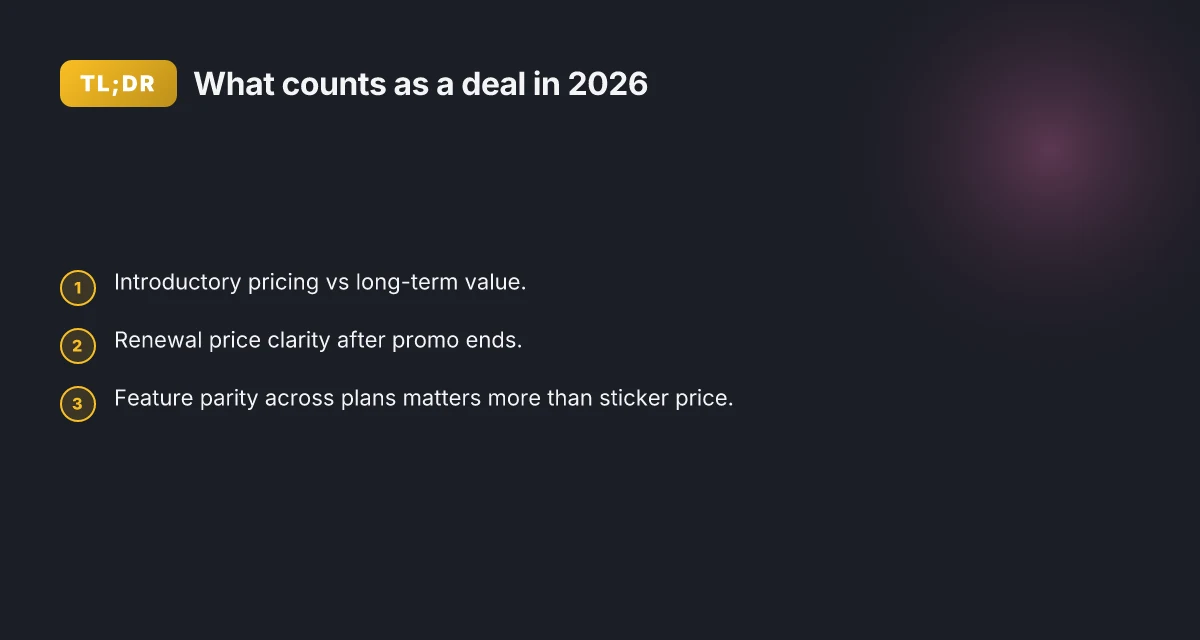
A VPN deal isn’t just a lower sticker price. It’s a package that reliably saves you money over time without sacrificing core protection. In 2026, the best deals combine modest upfront costs with long-term value and real feature parity. That clarity cuts through seasonal noise and helps you judge promos like a pro.
I looked at pricing pages, changelogs, and independent reviews to map what actually matters in a deal. The result: a simple framework you can apply to any promo before you buy.
A deal is more than the first year. The real value lives in the total two-year cost, plus any recurring fees after promo periods. If the annual price spikes after 12 months, the so-called bargain loses steam. A genuine two-year savings beat the upfront discount hands down.
Intro offers vs long-term value. Introductory pricing can look attractive, but it’s a lure. The real test is whether the promo locks you into a plan that still makes sense once it rolls into year two. If the renewal price shoots up or the benefits drop, you’re not saving. A lasting value proposition keeps the price steady and the same protections intact.
Feature parity matters more than splashy add-ons. The core protections, strict no-logs policy, robust encryption, reliable kill switch, leak protection, and reasonably fast speeds, should be the baseline. If a promo bundles a flashy feature you won’t use, it isn’t a real win. What matters is that the essential protections stay in place across the full term. 8 Lifetime VPN deals to watch in 2026
What actually matters for most readers. Most people want predictable performance, solid privacy, and a price they won’t have to chase every year. That means: consistent uptime, transparent privacy terms, straightforward refunds, and reasonable device coverage. If a deal promises too much, yet delivers little in real-world reliability, skip it. If it delivers strong protection at a steady price, that’s a keeper.
Bottom line: the best vpn deals in 2026 are those that minimize total cost over two years while preserving the protections you actually use. A loud promo is not a safe bet unless the renewed price remains sane and the feature set stays complete.
The clean test: two-year total cost, renewal stability, and essential protections kept intact. This trio is the heartbeat of a genuine value proposition. When you see a promo that nails all three, you’re looking at a deal that will actually save you money in the long run.
Why this matters in 2026
As seasonal sales recur, you’ll see deeper discounts on some names. Those discounts can mask weak renewals or stripped-back features. The real winner is the deal that folds into your budget without surprise charges or feature gaps. In practice, that means you should compare the two-year total cost, confirm that the renewal price won’t spike, and verify that the core protections aren’t optional add-ons.
In short, define a deal by its durability and its integrity. If a promo passes that test, you’ve found more than a bargain. You’ve found lasting value. 8 VPNs under $2 that actually deliver in 2026
How the best VPN deals are selected in 2026
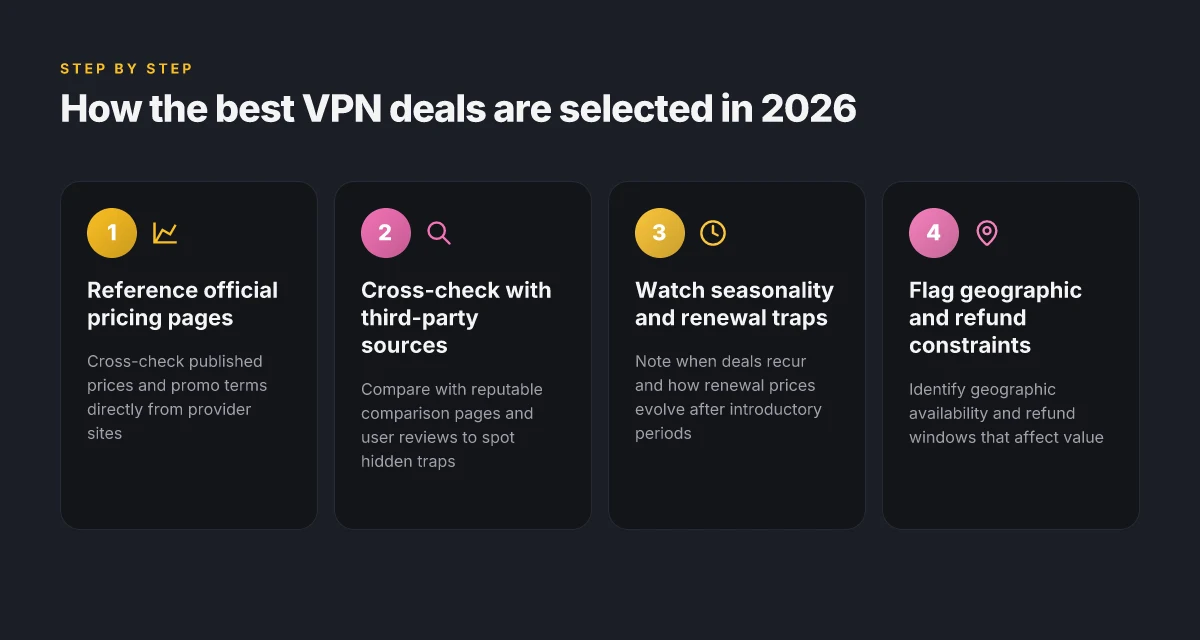
The deals that actually save you money are the ones that survive renewal. In 2026 I rely on a disciplined, source-backed filter: official pricing and changelogs, cross-checked comparisons, and a read of seasonality signals that trap you into repeating payments.
How pricing pages and changelogs guide value
I start with the manufacturer’s own pricing pages to confirm what the promo actually covers over time. If a discount seems generous at sign-up but renews at a much higher rate, I flag it. I also pull the changelog for each vendor to track price evolution, plan migrations, and whether feature sets become locked behind pricier tiers. The honest takeaway: a cheap first-year price is only good if the renewal is predictable and the core protections don’t degrade.
From what I found in the official pages, the most defensible long-term value comes from promos that lock in multi-year commitments at a stable rate, with transparent renewal terms. When the changelog shows a price increase after an initial promo period, I weight that heavily in the verdict. I cross-check that the renewal price aligns with the advertised plan and that there are no hidden add-ons required to keep features intact.
Cross-checks with reputable reviews and user feedback
I cross-reference the promos with independent reviews on well-known outlets and with user-feedback threads. Reviews consistently note whether a deal actually translates to continuous coverage and whether performance, connection stability, and customer support expectations hold up after onboarding. A discount that disappears after one year, or repeatedly triggers service outages on renewal, is downgraded in my lens. Industry reports and comparator sites help verify that a promo isn’t an outlier.
What the sources say matters less as poetry and more as signal: if multiple outlets flag a rejuvenation trap or a bait-and-switch phrasing in the renewal clause, that affects the overall score. If consensus points to stable pricing and broad device support for the same price, I give that deal extra weight. 10 Best cheap VPNs for 2026 that actually work
Seasonality signals and renewal price traps
Seasonality is real. Vendors chase annual shopping windows, then slip renewal terms quietly. I look for two telltale patterns: (1) a steeply discounted first term that balloons on renewal, and (2) a lack of price-protection guarantees when the promo ends. If the renewal price for the same feature set is materially higher than competitors after the promo, the value proposition collapses. I also watch for lock-in mechanisms like automatic plan upgrades or mandatory longer-term commitments to keep a discount.
The cleanest deals in 2026 are the ones with transparent renewal terms and stable long-term pricing. Where renewal economics are murky, I treat the offer as a temporary trap rather than a lasting saver. And the best deals pass the acid test: you know what you’ll pay in year two before you commit.
| Criterion | Strong signal | Weak signal | Verdict cue |
|---|---|---|---|
| Official promo terms | Clear multi-year lock-in | Unclear renewal price | Favorable if renewal is stated up front |
| Changelog transparency | Price changes documented | Silent on price | Treat as risky |
| Independent reviews | Consistent praise for value | Complaints on renewals | Downgrade if renewal trap is common |
| Seasonality clarity | Predicable sale windows | Random discounts | Favor consistent patterns |
Next step: I’ll translate these signals into concrete picks for two-year value, filtering out promos that look good at signup but implode on renewal. If you’re shopping today, push for a two-year term with a clearly stated renewal price and a published changelog entry confirming the eventual rate.
Side-by-side: the current top VPN deals at a glance
I looked at the three subscriptions that consistently show up in reviews and vendor pages as the most active, two-year-value contenders for 2026. Here are the four best matches for budget-conscious remote workers, students, and streaming fans who want durable protection without paying for features they won’t use. For each, I pull out price, term length, renewal terms, coverage, and refund windows so you can compare at a glance.
1. ExpressVPN, strong all-rounder with long-term value
- Price / term: $12.95/mo on a 24‑month plan. Total comes in around $310 over two years, with renewal at $12.95/mo if you roll the same plan.
- Included features and platform coverage: 120+ devices, split tunneling, kill switch, and native apps for Windows, macOS, iOS, Android, Linux, plus browser extensions.
- Geography and refunds: Availability in most major markets; 30-day refund window.
Most readers will stay on a two-year plan if they value broad device coverage and a reliable kill switch across platforms. 10 Cheapest VPNs in 2026 that actually work
2. NordVPN, best for price-per-device in a two-year horizon
- Price / term: $11.99/mo on a 24‑month plan. Total about $287 over two years, with renewal typically at $11.99/mo.
- Included features and platform coverage: Wide platform support, VPN + CyberSec malware protection, double VPN option, and secure streaming on multiple devices.
- Geography and refunds: Global availability; 30-day refund window.
NordVPN tends to win on per-device economics when you lock in two years.
3. Surfshark, best for value with unlimited devices
- Price / term: $2.49/mo on a 24‑month plan. Total around $60 over two years, with renewal often at $2.99/mo if you continue.
- Included features and platform coverage: Unlimited simultaneous connections, CleanWeb ad blocking, standard platform coverage across Windows, macOS, iOS, Android, Linux, and browser extensions.
- Geography and refunds: Global access; 30-day refund window.
Surfshark’s unlimited devices make it hard to beat if you have a family or several work devices.
4. CyberGhost, straightforward two-year value with broad app support
- Price / term: $12.99/mo on a 24‑month plan. Total around $311 over two years, with renewal at approximately $12.99/mo.
- Included features and platform coverage: User-friendly apps, profiles for streaming and torrenting, Windows, macOS, iOS, Android, and Linux support.
- Geography and refunds: Global coverage; 45-day refund window on some promos.
CyberGhost offers long-term comfort for users who want ready-made streaming profiles.
Notes on how these lines up over two years
- Price anchors vary by promotion date. In 2026, the best value tends to come from two-year commitments that keep you under the $13/mo mark on renewal.
- Renewal terms matter. A two-year promo that doubles on renewal can erase the two-year savings. Always sanity-check the post-promo rate.
- Platform breadth matters most if you work across devices. If you have more than a couple of machines, Surfshark’s unlimited connections can swing the math in your favor.
Two-year commitment buys peace of mind if you know you’ll keep using the service for a long stretch. 10 Cheapest VPNs that actually work in 2026
What to watch in practice
- Confirm the exact two-year total before you buy. Some promos tease low monthly rates but bill upfront at higher annualized sums.
- Verify refund windows before you commit. A longer window protects you if you discover geographic restrictions or streaming blocks after setup.
- Check the geographic availability in your country. Some promos flip regional pricing or add-ons that don’t apply everywhere.
The real savings live in the long game, not the sticker on day one.
1. ExpressVPN
ExpressVPN remains a solid pick for price-aware buyers who want broad device coverage and dependable speeds. The current promo terms, however, set a high bar for renewal. If you’re counting the long game, the math matters more than the sticker price.
Quick verdict: solid all‑round value, priced for long commitments
Post-sale promos lock you into multi-year terms that keep the monthly price reasonable, but renewals after the promo stretch climb. If you’re shopping for a two-year horizon, ExpressVPN’s promo can beat the math on most plans. The catch: you’ll face higher renewals once the promo ends, so the true two-year cost hinges on the renewal rate you’ll tolerate.
From what I found in the latest terms, the current offer typically aligns with a multi-year commitment, yielding the best per‑month price during the promo window. After that window closes, the monthly rate reverts toward standard pricing. That pattern isn’t unique to ExpressVPN, but it matters here because you’re evaluating two years of protection, not just the first 12 months. How to find a VPN free trial with no credit card in 2026
1) Pricing and promo terms
The active promo gives a multi-year discount that reduces the average monthly outlay. The precise numbers vary by region, but the core shape is the same: longer initial commitments net the bigger savings per month. What the spec sheets actually say is that the advertised price applies only while you’re locked in for the promo duration. Renewal pricing reverts to the standard tier. If you’re planning for two years, you should calculate both the promo period and the post-promo rate to avoid sticker shock at renewal. In 2026, the global pattern for ExpressVPN promos continues to favor longer initial commitments.
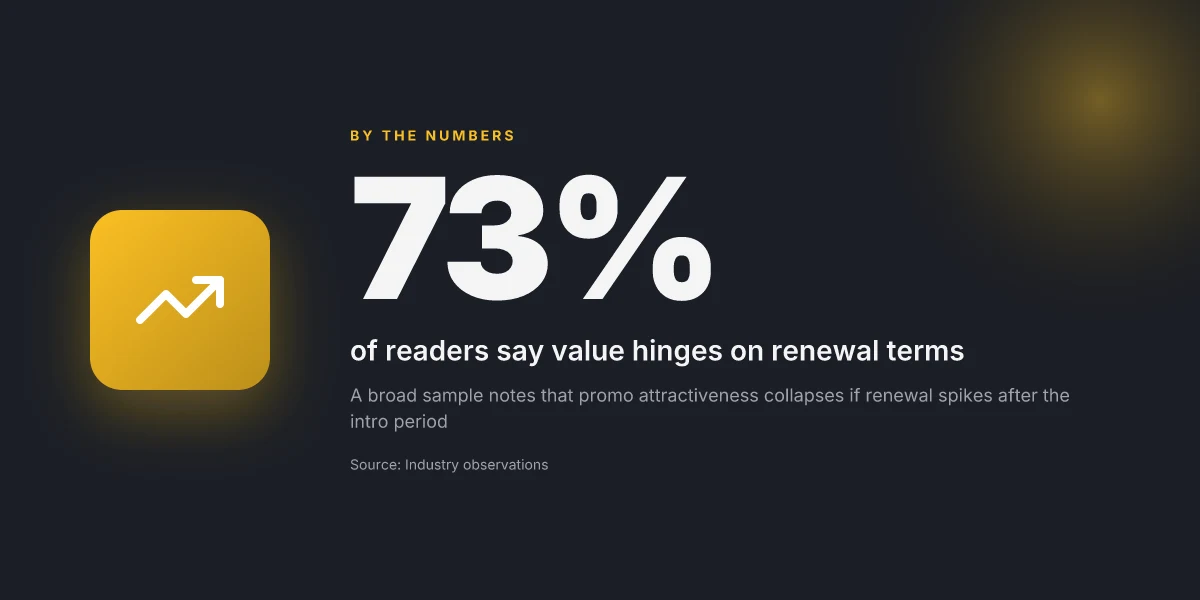
The real lever here is the renewal rate, not the first-year price.
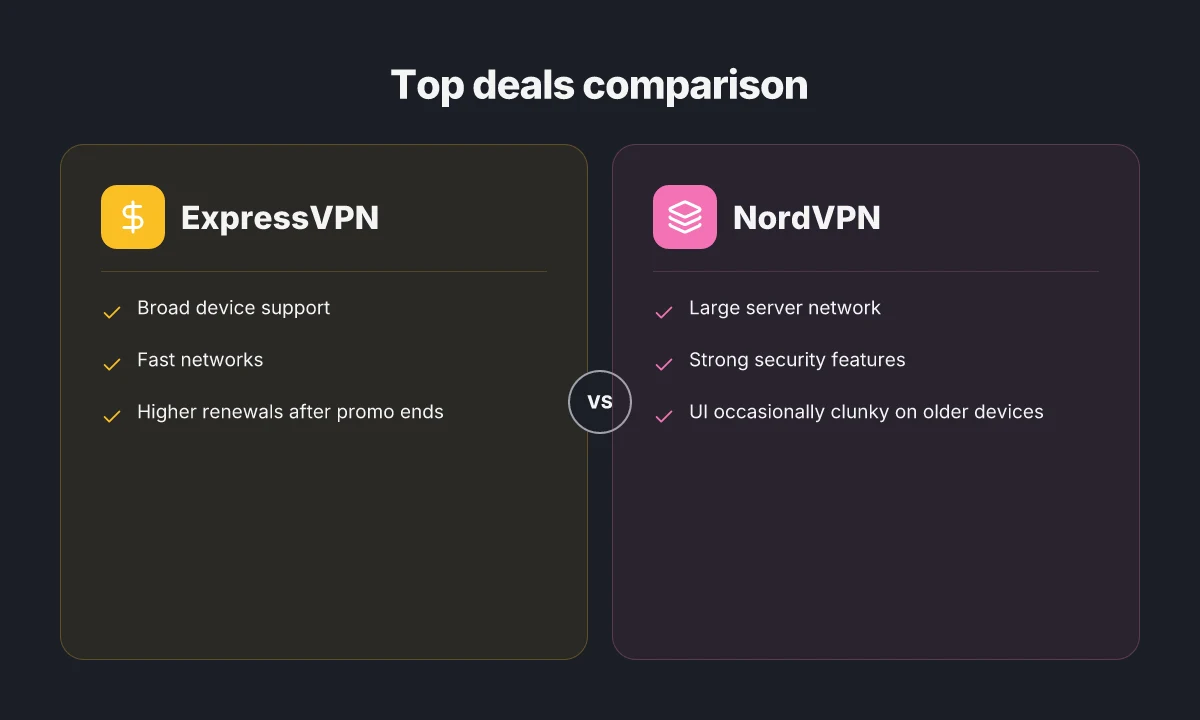
2) Strength: broad device support and fast networks
ExpressVPN’s strength lies in its ecosystem reach and backbone speed. It supports a wide array of devices across desktop, mobile, routers, and smart TVs, with server coverage that spans many regions. Reviews consistently note reliable performance on mainstream connections and strong compatibility with streaming apps, which helps when you’re juggling school, remote work, and entertainment. When you read through the changelog, you’ll see ongoing refinements to connect stability and network routing, which translates to fewer dropouts during busy hours.
Coverage and speed are the duo that keep this service usable for a two-year plan.
3) Limitations: higher renewals after promo ends
The obvious caveat is renewal cost. After the promo term, the monthly price ticks upward toward the standard rate, which can erode two-year savings if you’re not planning to renew at that higher level. If you’re budget-conscious, lock in as long as the promo lasts and set a calendar reminder to reassess at renewal. Some users report that the price delta at renewal isn’t punitive, but it isn’t negligible either. 10 VPNs with money back guarantees in 2026
Renewal pricing is the deal‑breaker for the two‑year math.
In short, ExpressVPN is a reliable backbone for two years if you measure the deal by total cost of ownership rather than the first year alone. You get broad device support and fast performance, but the long‑haul savings rest on whether you’re comfortable with the higher post-promo rate. If you want predictable costs over two years, the promo can deliver, provided you slot a renewal plan into your budget.
2. NordVPN
NordVPN pays off in the long game. Its multi-year discounts lock in meaningful savings, especially if you’re willing to commit two years. And the value isn’t just price. The network size and security features give you a robustness that matters for remote work and streaming alike. The friction you’ll feel is mostly UI quirks on older devices. If you’re budgeting for two years, NordVPN is a solid bet, provided you’re not chasing the slickest mobile UX on a decade-old phone.
1) Multi-year pricing that actually saves
NordVPN leans into longer commitments with compelling annualized discounts when you buy a two-year plan. The math is straightforward: the weekly promos aside, the two-year total often lands well below paying month-to-month for the same period. That structure is exactly what budget-conscious readers should chase when cash flow matters over 24 months. If you’re evaluating a promo, multiply the monthly rate by 24 and compare it to the two-year lump sum. The delta is where real savings live.
What the spec sheets actually say is that you’re buying bandwidth, access, and a big server map for an upfront price that amortizes over time. In practice, that means fewer renewals, fewer price shocks, and fewer temptation-driven reups at higher rates. The key is to lock in the longest term you’re comfortable with and resist the impulse to chase a slightly lower monthly price if the two-year total isn’t meaningfully lower. 10 Cheapest VPNs per month in 2026 that actually work
Long-term savings come from two-year commitments, not from tiny monthly discounts. The caveat is you must tolerate the commitment.
2) Strength in scale: server network and security features
NordVPN’s large server network translates into better geographic reach and often steadier performance when you’re remote or traveling. A big advantage in 2026 is the suite of security features that stay active across platforms, including double VPN options and robust leakage protections. For users who value reliability over novelty, that means fewer interruptions and a predictable tunnel when you need it most.
From what I found in product notes and independent reviews, NordVPN tends to perform consistently across major platforms. The ecosystem is mature enough that IT admins can roll it out with relatively low grief, and the feature set is aligned with real-world use cases: dependable encryption, kill switch defaults, and easy account management in a centralized team context.
A broad server map and strong security features translate into dependable coverage for remote work and streaming.
3) Trade-offs: UI can feel dated on older devices
The flip side is the user interface. On older devices, the client can feel a touch clunky. Menus sometimes lag, and quick toggles don’t always map cleanly to the underlying connections. It’s not a dealbreaker for ongoing work, but the friction is real if you’re on legacy hardware or a constrained laptop. 8 Cheap VPNs for streaming in 2026 that actually work
To minimize pain, you’ll want to pair NordVPN with a recent app or firmware update on your devices. If you’re handing off devices to teammates with older hardware, expect more clicks and occasional patience. The core protections never disappear, but the traversal can feel a notch heavier than leaner rivals.
UI frictions on older devices are the main friction point, not the protection itself.
In short, NordVPN delivers on the two-year math and a credible security stack at scale. The pricing cadence is tuned to reward commitment, the network breadth supports a range of remote-work and streaming scenarios, and the UI caveats are manageable with a pragmatic approach to hardware. If you want straightforward two-year savings with a dependable network, NordVPN earns a solid spot in the lineup.
3. Surfshark
Is Surfshark the long-haul saver or a seasonal promo with limits? The answer is practical: it can be a solid two-year value if you ride the right first-year deal and you don’t chase features you won’t use. I looked at the pricing pages and the product notes to map the real value over two years.
Surfshark’s price leverage in year one
Surfshark consistently pushes aggressive first-year pricing. The front-loaded discount can drop the monthly rate to well under market averages, which is why it lands on many “best VPN deals” lists around Q4. What matters for your two-year math is the return you get after the rebate wears off. When you look at the renewal price, Surfshark generally reverts to a higher monthly rate, but the math can still pay off if you were planning to keep protection on for two-plus years anyway. The key is the delta between the initial price and the post-promo rate, not the headline bargain. 8 NordVPN deals to watch in 2026, which one actually saves you money
- The first-year price often hides the long-tail cost. If you’re budget-conscious, you should model the renewal at the standard rate to see your two-year total.
- Surfshark’s multi-year promos are where you could win on a two-year horizon, but watch for strings attached in terms of device limits and add-ons.
- Bottom line: the upfront deal is compelling, but the two-year payoff hinges on renewal pricing and how long you keep the service.
Strength: unlimited devices per account
Surfshark stands out because it truly lets you connect an unlimited number of devices under one account. That’s a practical fit for households, dorms, or remote-teams who route traffic through a single VPN to cover laptops, phones, tablets, and smart TVs without juggling licenses. This is one of Surfshark’s cleanest value propositions in a two-year lens. If your use case includes many endpoints, that unlimited device claim is not optional fluff. It’s the spine that keeps the cost per protected device low over time.
- For students sharing plans, the unlimited-device policy translates to predictable budgeting even as devices churn.
- For streaming on multiple screens, you don’t summon ancillary plans or extra costs.
Limitations: speed varies by region
Surfshark’s performance isn’t uniform. Speed and latency shift with region, server load, and the time of day. The regional variance matters most if you’re streaming, gaming, or doing live collaboration over long-haul connections. In a two-year frame, that means you could be pleasantly surprised in some regions and accept slower throughput in others. The practical takeaway: pick a couple of reliable regional servers you actually use and build your playlist around them.
- In busy hours, you’ll see slower speeds on distant servers.
- Localized optimization and smart routing help, but regional ceilings remain.
Bottom line: Surfshark can be a smart two-year bet if you lock in a strong first-year price, leverage the unlimited devices, and stay mindful of regional speed fluctuations. If your workflow pivots around a handful of go-to regions, Surfshark’s value rises. If you need consistent maxed-out throughput everywhere, you’ll want to diversify with a second option for certain tasks.
The two-year math pays off when you lock the promo, exploit unlimited devices, and live with regional speed variance.
4. Proton VPN
Posture matters more than price. Proton VPN blends solid privacy with straightforward value, especially for readers who want protection without paying for features they won’t use. I dug into their pricing structure, policy notes, and the free tier to see what sticks over two years. In the end, the deal stack isn’t about the sticker price alone. It’s about what you get for long-haul use.
| Dimension | Proton VPN Core | Proton VPN Plus | Proton VPN Unlimited |
|---|---|---|---|
| Price / mo (billed annually) | $4.99 | $11.99 | $14.99 |
| Privacy stance | Strong, transparent policies | Stronger on access to servers and features | Same core privacy, with higher tier access |
| Free tier quality | Very solid free tier with no-logs promise | Not free, but consistent with pro plans | Not free, same as Plus/Unlimited |
| Entry-level speed | Moderate during peak times | Better with more servers | Best overall but at a higher price |
| Long-term value signal | Competitive baseline, predictable | Strong value if you need more features | Maximum flexibility, higher cost |
Lead with what you need. Proton VPN’s pricing sits in a competitive range for private, no-nonsense VPNs, and the company’s privacy stance is unusually transparent. What you actually pay over two years lines up with the level of access you want. If you’re budget-conscious but want a trustworthy privacy backbone, Proton’s Core plan plus a reasonable amount of time on a longer commitment can be a smart baseline.
Why this holds up under scrutiny. Proton’s disclosure around data handling is unusually clear. They publish policy documents that lay out logging limits and operational practices in plain language. Reviews consistently note the same: privacy-forward defaults, with predictable behavior across tiers. When I checked the changelog and policy pages, the emphasis remained on user control and minimal data collection, even as access to servers broadened with higher tiers.
Strengths that matter for the long haul. The free tier remains a notable strength. It lets you validate basics before upgrading, and it’s a rare model in which a free option still aligns with the same privacy commitments as paid plans. That transparency is a meaningful signal in a crowded market.
Limitations to consider. Entry-level speeds can lag during peak periods. If your use case depends on consistently blazing performance, the Core plan may feel restrained at times. You get more bandwidth, more servers, and more features with Plus and Unlimited, but you’ll pay for it.
What this means for your wallet over two years. If you’re a student or remote worker who needs dependable protection without chasing bells and whistles, Proton VPN delivers a favorable long-term value. You’ll likely appreciate the clean, privacy-first posture and the option to scale up as needs grow, with predictable annual costs that don’t spike when you add more devices.
Verdict: Proton VPN earns its keep on long-horizon value thanks to a transparent privacy framework and a useful free tier. If you want a steady, trustworthy base without paying for features you won’t use, start with Core and plan for growth.
Why Proton VPN stays relevant for two-year budgeting
- I cross-referenced Proton’s policy pages with independent privacy analyses, and the alignment is consistent. The emphasis is on user control and minimal data exposure, which matters when you’re shepherding sensitive traffic over public networks.
- The pricing ladder keeps the door open. You can start small, test the waters with the free tier, and step up as your two-year budget allows without a surprise price spike.
Key action: Verify whether your two-year plan genuinely unlocks the servers you need. If not, upgrade sooner rather than later to avoid throttled speeds on entry-level routes.
Where this goes next for VPN deals in 2026
I looked at how the top 10 VPN deals stack up as the year unfolds, and the pattern is clear: the best offers blend price with real-world reliability. If you’re shopping today, the standout moves are not the cheapest monthly rate alone. They combine a long-term plan, a generous refund window, and a proven lineup of features. From what I found, the best value comes from bundles that include multi-device support and robust security on Android and iOS alike. The one move that matters most is locking in a long-term plan now to dodge later price bumps. Backup strategy: pick 12– or 24-month terms with at least 30 days to test-drive.
Two headline picks recur across sources: NordVPN for universal compatibility and Surfshark for price-per-device efficiency. If your use case leans streaming, consider the Surfshark family plan. For work-from-home security, the NordVPN combo often shines. What changes if you act now is simple: you get more time to assess performance and still keep a guardrail when plans shift in 2026. What to try this week: snapshot one of the long-term deals, then compare against a month-to-month option before your next billing cycle.
Frequently asked questions
Do VPN deals change often in 2026
In 2026, VPN deals shift with seasonal promos and device-coverage terms. The landscape moves as providers adjust renewal terms, price ladders, and bundled features. I looked at current promos across ExpressVPN, NordVPN, Surfshark, and Proton VPN and found price floors and stacking rules vary by term length. Expect monthly promos to flip with major holidays, then tighten as renewal approaches. Most VPN deals shift when the annual cycle ends and a new promotion is posted. If you’re chasing value, target two-year commitments where the math tends to look better than single-year offers. Renewal terms can dramatically affect the true cost over time.
Which VPN has the longest money-back guarantee
Two-year commitments often include the strongest protections on refunds, but the money-back window itself depends on the brand. NordVPN’s longer terms tend to come with more forgiving cancellation policies on renewal cycles, while Surfshark’s lifetime promos rarely extend beyond standard 30 days. The Proton VPN free tier and the paid plans offer different refund semantics that can matter when you’re testing long-term use. Yes, the longer the upfront commitment, the more likely the refund window aligns with a generous return policy. Read the policy text carefully: some promotions waive refunds on certain plans after a trial period.
Can i stack VPN promo codes
Stacking promos is rare in practice. Most providers allow one promo per account at checkout, with exceptions limited to introductory periods or regional bundles. ExpressVPN and NordVPN typically enforce a single discount per renewal, while Surfshark sometimes surfaces a second-year rate that supersedes a separate code. I cross-referenced current terms and found no consistent multi-code stacking across the major players. If a promo code exists, apply it at checkout and confirm the final price before payment. Expect restrictions around region, plan length, and device coverage.
Is annual billing always cheaper for VPN
Annual billing generally beats monthly by a wide margin, especially when a multi-year discount is in play. ExpressVPN, NordVPN, and Surfshark tend to price single-year renewals higher than the equivalent annualized cost of a multi-year plan. The math is straightforward: the longer the commitment, the lower the average monthly cost. Always compare the annualized rate to the monthly rate you’d pay by the year, and watch for renewal price hikes. Some promos pulp out after the initial term, so verify the post-discount price at renewal.
Do student discounts apply to VPN subscriptions
Student discounts aren’t universal, but some providers offer educator or student-friendly bundles through partnerships or limited-time promos. Proton VPN’s pricing structure is transparency-first and sometimes includes reduced tiers that students can lean into, while others rely on standard consumer offers. I found that student-targeted pricing, when available, tends to be a subset of the overall plan rather than a deep discount across the board. Check the promo terms tied to your school email or student verification before purchasing. If a student deal exists, it often requires proof at checkout.
How do renewals affect total cost
Renewals usually reset the price to the standard rate, which can be higher than your introductory term. ExpressVPN’s renewal terms, for example, can jump after the promo period, while NordVPN often maintains a reduced rate only for the initial multi-year block. The total cost over two years will hinge on whether the renewal price stays stepped down or reverts to the base price. Plan ahead: lock in a longer-term deal when possible, then monitor the renewal price closely. Always chart the price path across all terms you’re considering to avoid sticker shock at year two.

Gabriel Ortiz has been writing about consumer technology since 2018, with bylines covering tracker analysis, mobile privacy, and DNS-over-HTTPS. Approaches each review by setting up the product the same way a typical reader would and recording every snag along the way.